
Why is SuperDARN Important?
The Modern Technological Age
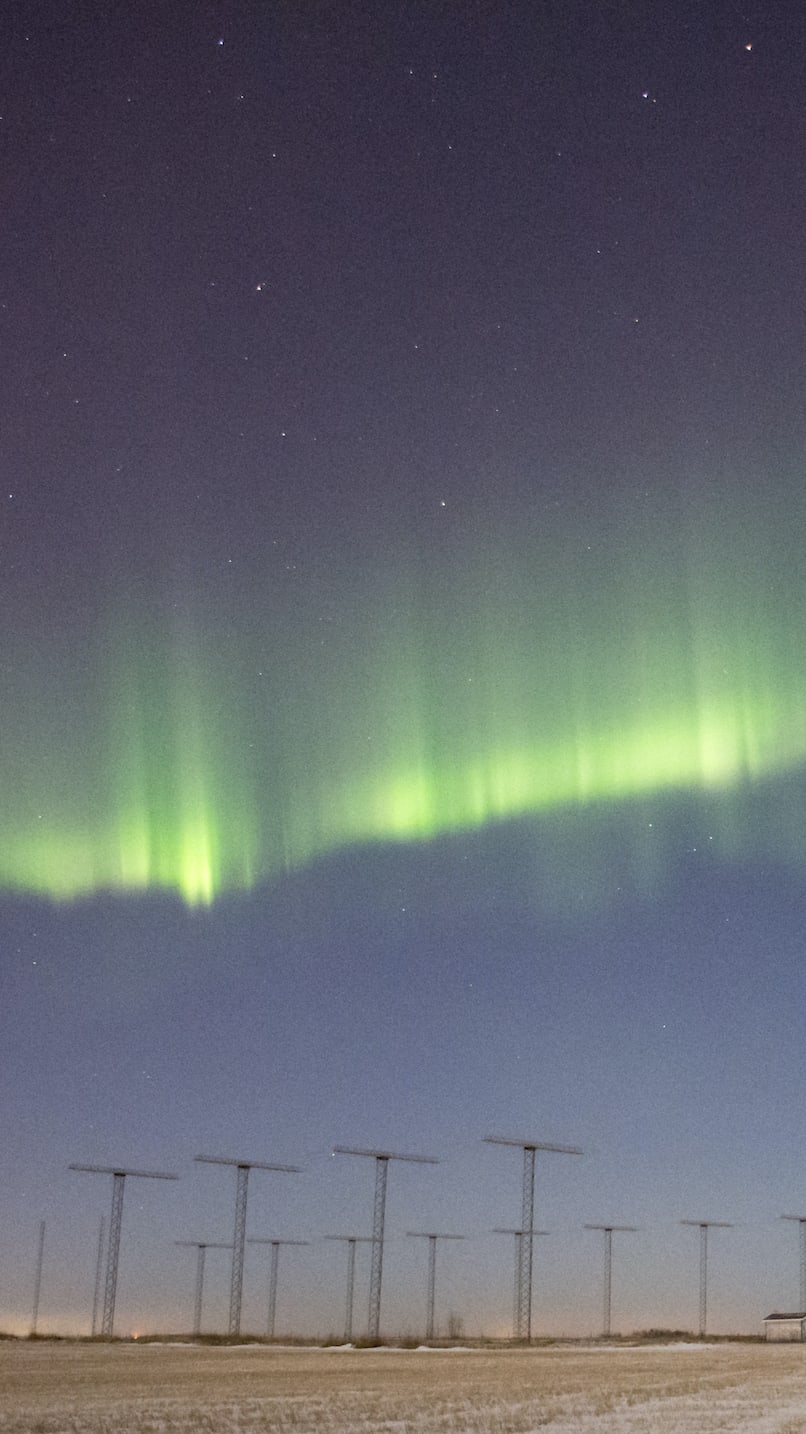
The aurora and stars over the Saskatoon radar. (Credit: Ashton Reimer)
The technologically driven and dependant world we live in is vulnerable to the phenomena of the near-Earth space environment. In order to mitigate detrimental effects of Space Weather, it is imperative to understand the Sun-Earth system.
Canada, as a Northern nation, relies heavily on technology that is vulnerable to Space Weather effects, such as:
- Pipeline corrosion
- Damage to the electrical power grids
- Degradation of satellite navigation (e.g. GPS) accuracy
- Loss of radio communications
- Radiation from space causing polar flights to be diverted
- Damage to telecommunications satellites that facilitate billions of dollars of business every day
All of which can lead to the disruption of our modern tech-based daily lives, loss of business and livelihoods, to even loss of life in extreme situations.
An extreme example of a detrimental real-life effect of Space Weather vulnerability to Canadians, is the loss of power for the entire province of Quebec caused by a large geomagnetic storm in March, 1989. The phenomena of Space Weather, however, can also be experienced safely by viewing the Aurora Borealis and Australis which is an indicator of current geomagnetic conditions. Read more about space weather here!
Scientific Support
SuperDARN is also an important part of the CSA (Canadian Space Agency) national scientific program Geospace Observatory (GO) Canada, spanning five universities and three government departments. SuperDARN is essential for support of the Canadian satellite mission ePOP, ESA’s Swarm satellite mission amongst many other satellite missions.
Canada has been the largest contributor to the important Arctic component of the international SuperDARN program, with the most northerly radars at Rankin Inlet, Inuvik, and Clyde River. The Canadian SuperDARN radar sites are established physical presences in the Canadian High Arctic. Canada plays an irreplaceable role in the SuperDARN collaboration by providing coverage of the High Arctic.
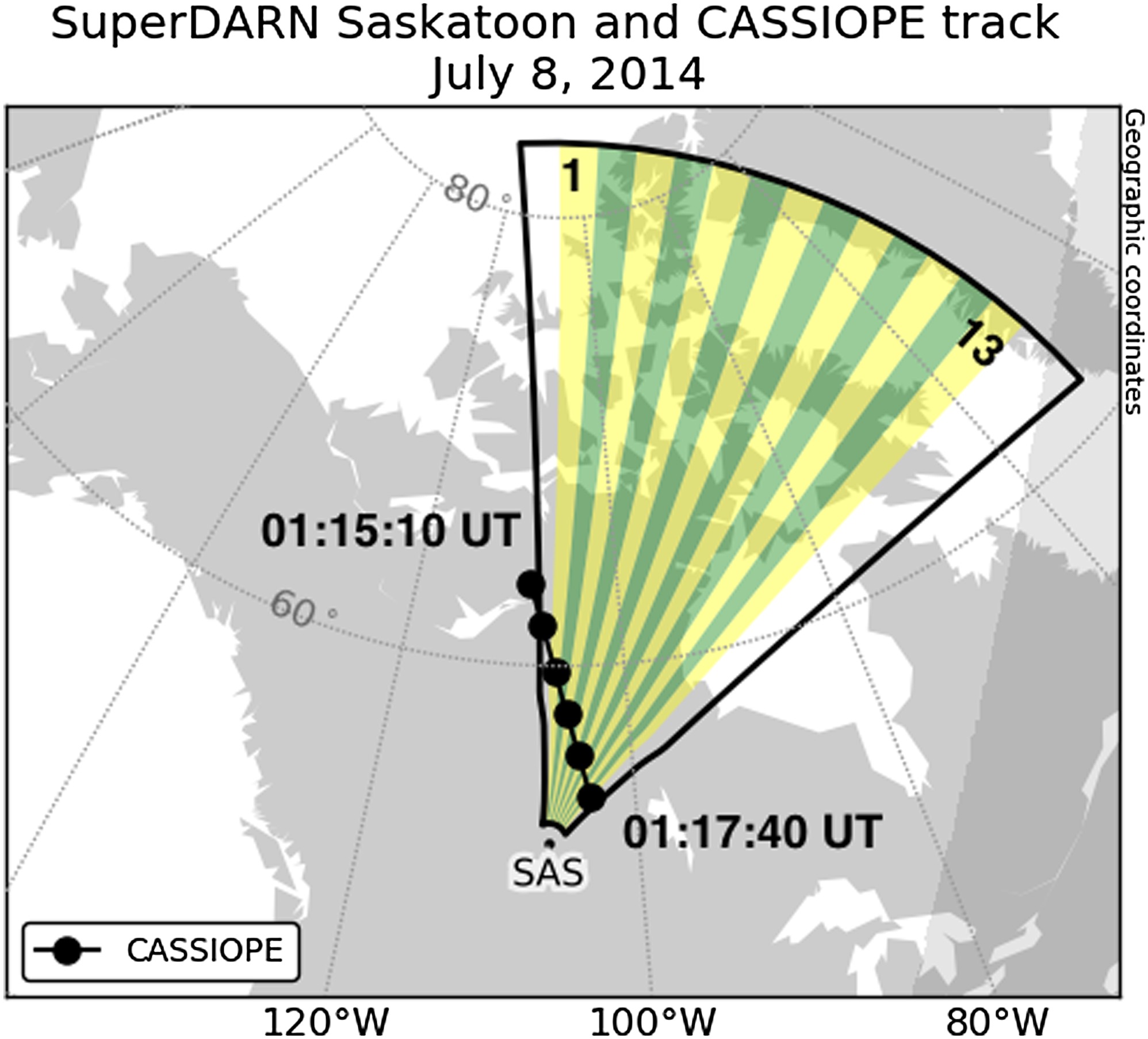
Diagram from Perry et al. 2016, showing the Saskatoon radar field of view (green and yellow) and the CASSIOPE satellite (which carries ePOP) trajectory in black.
Contributions to Space Science Research
Space science is an ever-expanding field of research, and researchers worldwide are studying to understand the complex different parts of the Space Weather system. An ultimate goal of the community would be to understand linked processes as big as the solar system and as small as an electron, all at the same time to predict, and protect the human race from, Space Weather.
The global nature of SuperDARN observations are essential for understanding how electromagnetic forces in space affect the Earth on a global scale, and understanding the localized plasma physics in the ionosphere.
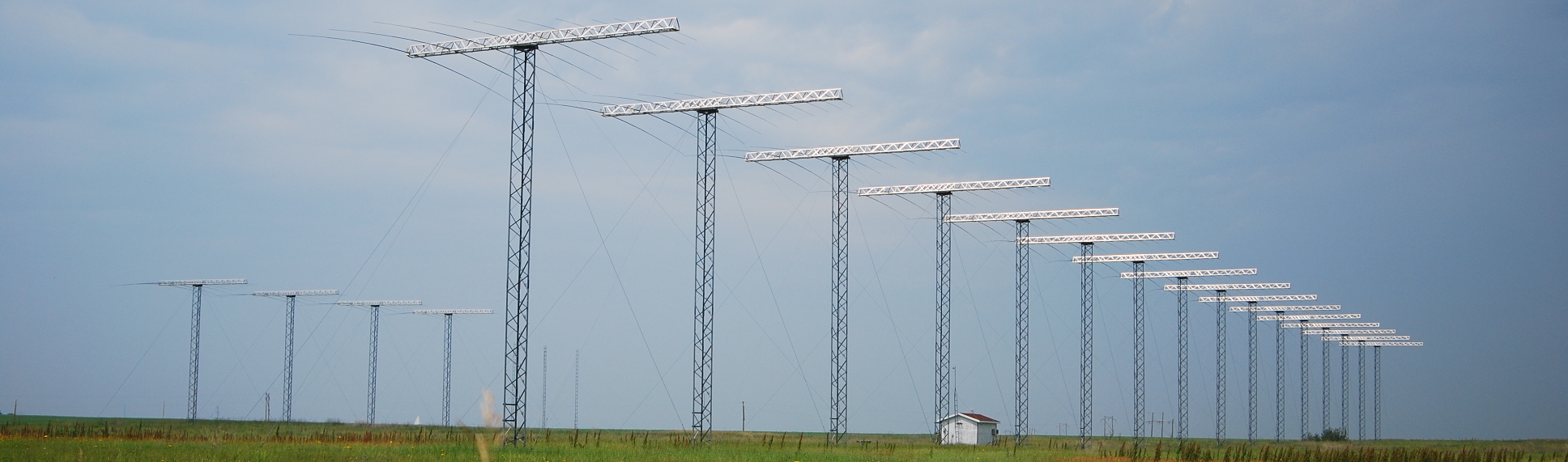
Saskatoon radar and radar hut.