
SuperDARN Canada
Our Origins
Canada is a founding member of SuperDARN. The original SuperDARN partners (Canada, France and the USA) met in Saskatoon in 1993 to switch on the first Canadian SuperDARN radar. The Saskatoon radar continues to operate to this day. The SuperDARN Canada headquarters is located at the University of Saskatchewan in Saskatoon, within the Institute of Space and Atmospheric Science.
Canada has the largest land mass under the auroral oval (an oval shaped region around the geomagnetic pole where the aurora most commonly occurs). Therefore, Canada is an ideal place to study the solar-terrestrial (Sun-Earth) interaction using ground based SuperDARN radars.
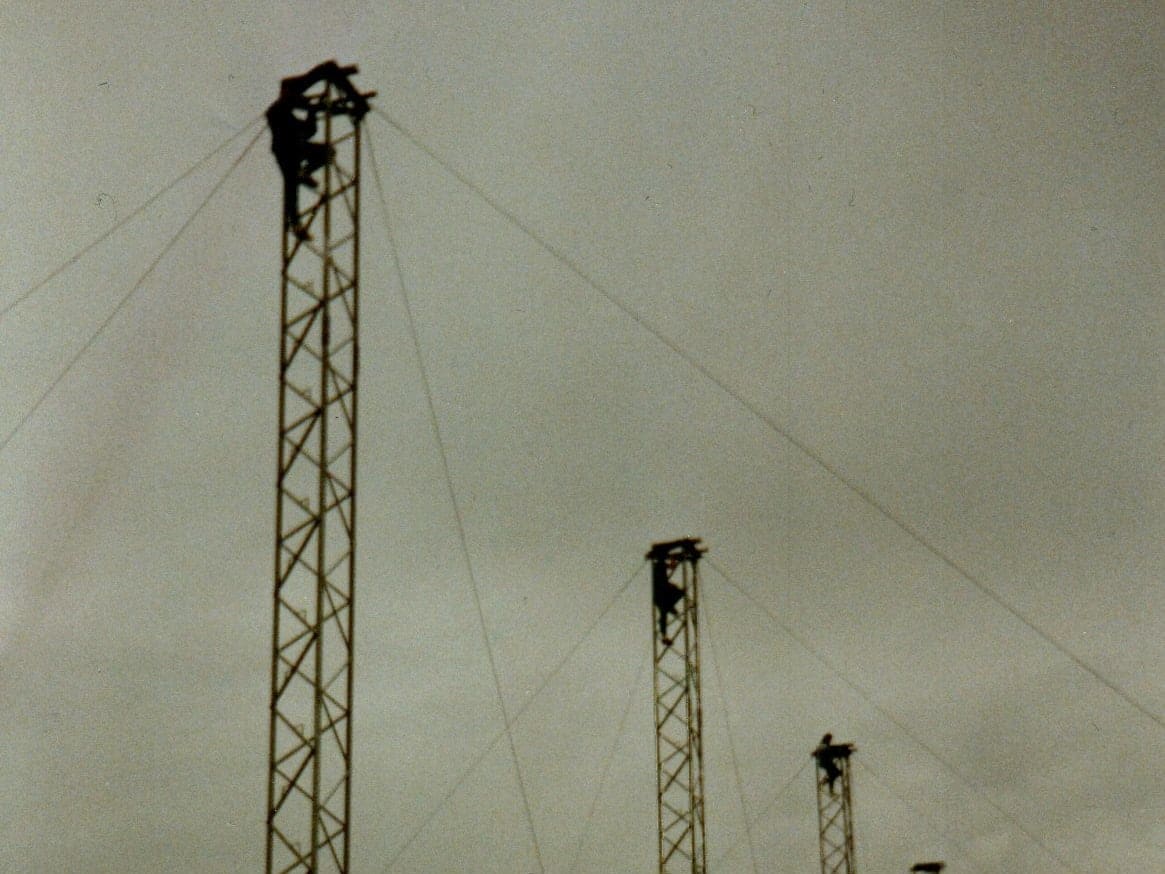
An early photo of our engineers and students constructing the antenna towers for the Saskatoon radar (early 1990's). (Credit: Kathryn McWilliams)
Our Radars and Sites
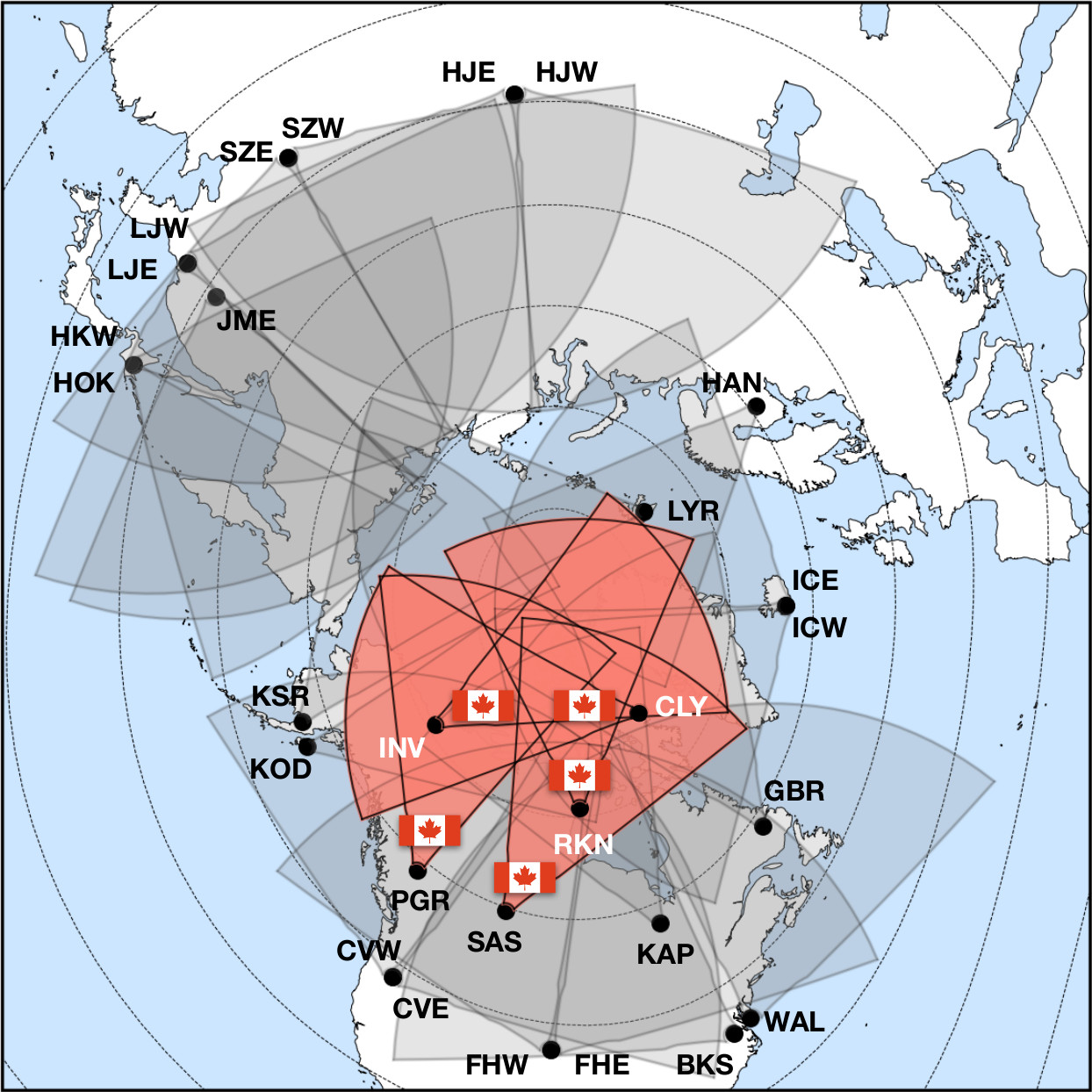
The above figure shows the fields of view for each Northern hemisphere radar with SuperDARN Canada managed radars marked in red as CLY, INV, RKN, PGR and SAS. The landmasses are shown in white, and the geomagnetic latitudes are denoted by dotted concentric ovals around the geomagnetic pole.
SuperDARN Canada maintains and operates five SuperDARN radars that cover an area centred on the interaction region between the solar wind and the Earth’s space environment. These five radars provide essential information about solar wind energy and momentum transport in near-Earth space and are a crucial part of the radar collaboration covering the pole and high latitudes.
Our radars are situated in Saskatoon, Saskatchewan; Prince George, British Columbia; Rankin Inlet, Nunavut; Inuvik, Northwest Territories; and Clyde River, Nunavut. A number of our sites are in remote and very northern areas, as such we rely on the fantastic communities, services, and custodians to keep our radars running when we can't visit ourselves.
Our sites may be remote, but thanks to modern technology we can also keep an eye on what the radars are doing from the comfort of our offices in Sasakatoon. See our real time displays to see what data the radars are returning right now.
Saskatoon
Saskatoon is SuperDARN Canada's oldest and longest running radar. Built in the early 1990's, the radar started to produce data in September 1993 and has been running ever since.
Located just outside of the city of Saskatoon, Saskatchewan, the radar is one of the more easily accessed radars. In 2019, the new digital radar electronic system, Borealis was installed, and a new radar hut to house all the electronics in was constructed in 2020/2021. The old-style antennas were replaced in 2023 with new twin-terminated folding dipole antenna and extra supporting towers, which you can also see at the Clyde, Rankin and Inuvik sites below.
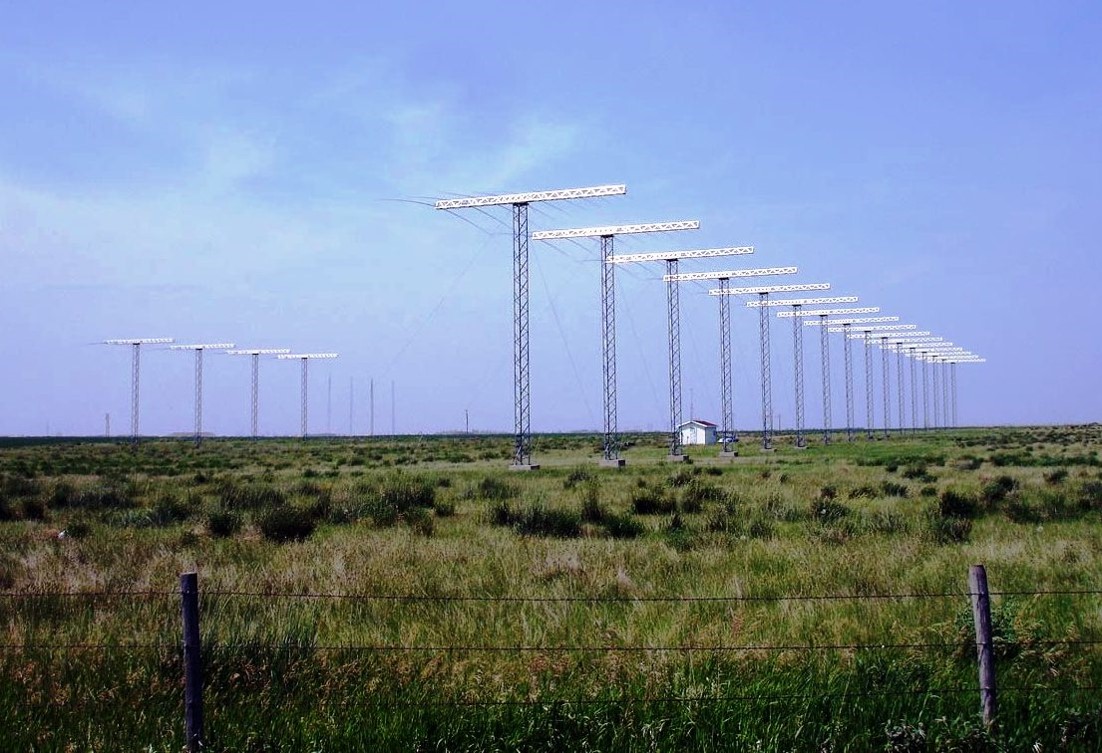
An early photo of the Saskatoon radar site, shortly after construction was completed.
Prince George
Prince George radar began operations in March, 2000. In September 2019, SuperDARN Canada's new digital radar electronics system, Borealis, was installed. Located to the North East of the city of Prince George, British Columbia, the radar famously shares land with a herd of cows.
The city, named for King George III, was set up as a fur
trading post of the North West Company. [princegeorge.ca]
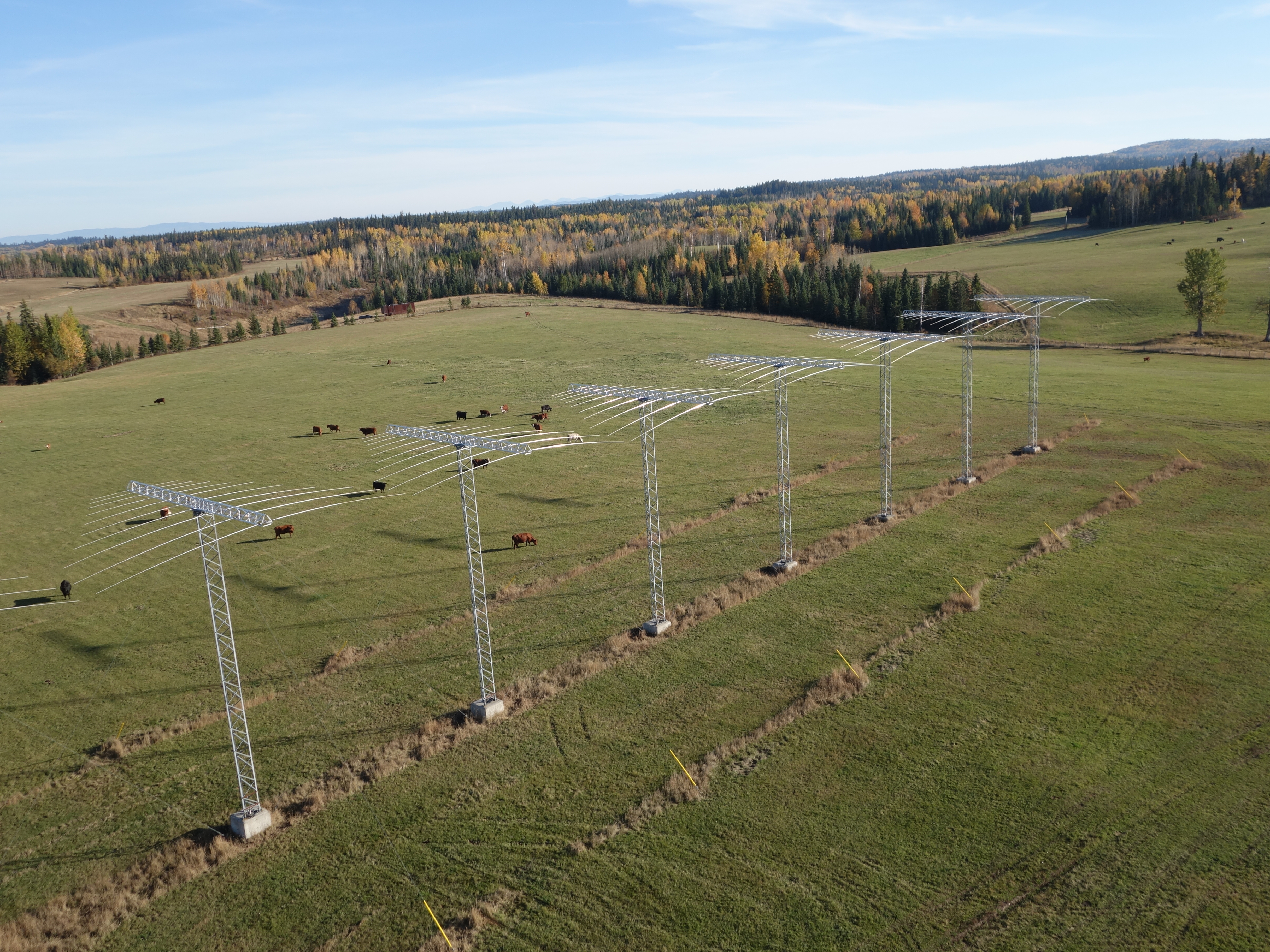
Prince George radar from above.
Rankin Inlet
Rankin Inlet is a small hamlet on the Kudlulik peninsula in Nunavut. In Inuktitut, the town is called Kangiqliniq, which means 'deep bay'. The Rankin Inlet area has seen human habitation for over 800 years, even though the area is known for it's cold winds and severe blizzards, it is a hotbed for cultural archeological discoveries of the Thule people.
The radar at Rankin Inlet
saw first light on 1st May 2007. [rankininlet.ca]
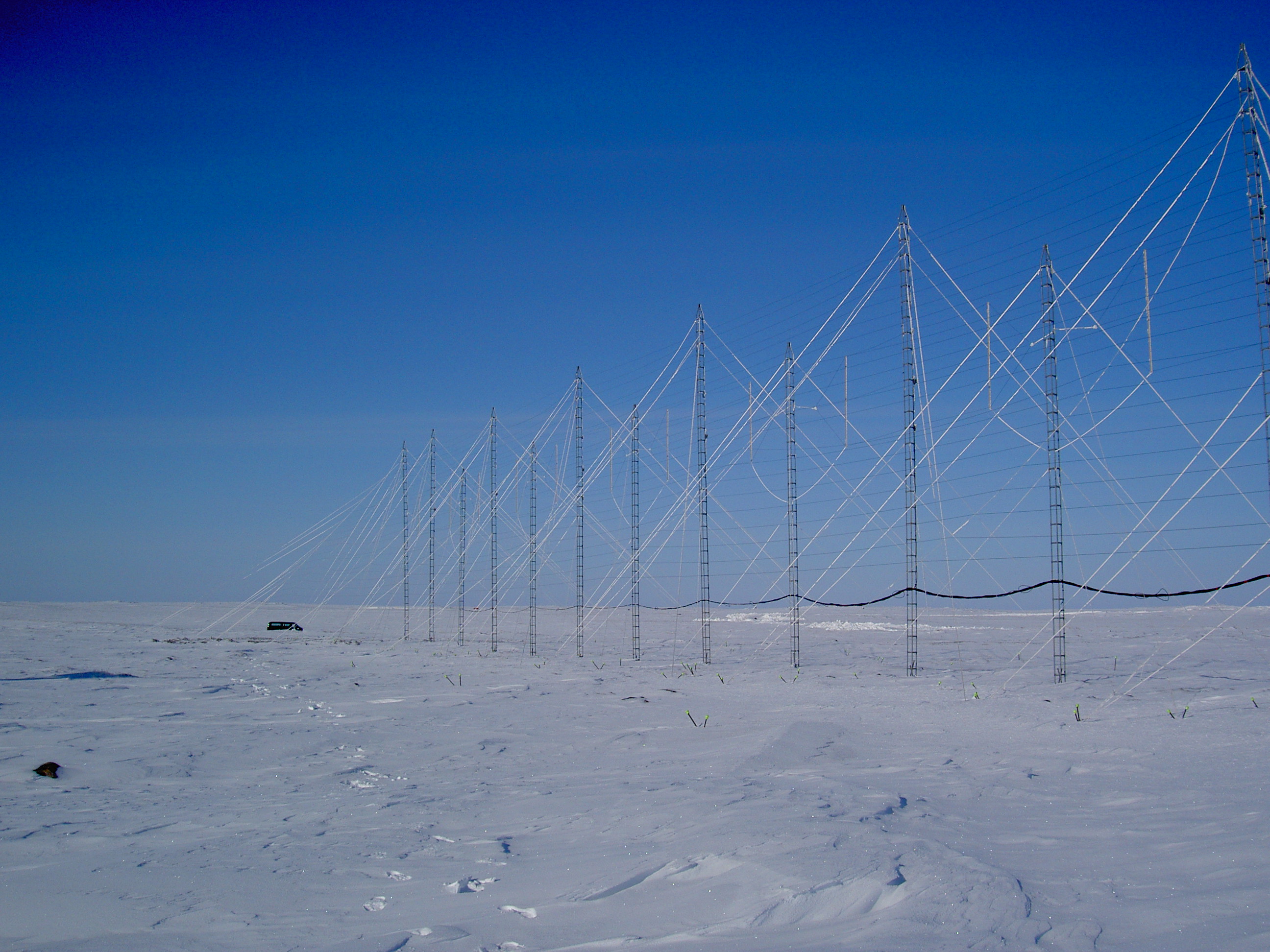
Clear skies at Rankin Inlet.
Inuvik
Inuvik radar started operation in January 2008, and is located just outside the town of Inuvik in the Northwest Territories.
Inuvik, meaning 'place of man', is 200km inside the Arctic Circle, and as such sees continuous sunlight in the summer and 30 days of polar night in winter. Inuvik is a fairly new town, created in the mid 1900's as a relocation of Aklavik which suffered from severe
flooding and was originally set up as a trading post in the early 1900's. [inuvik.ca]
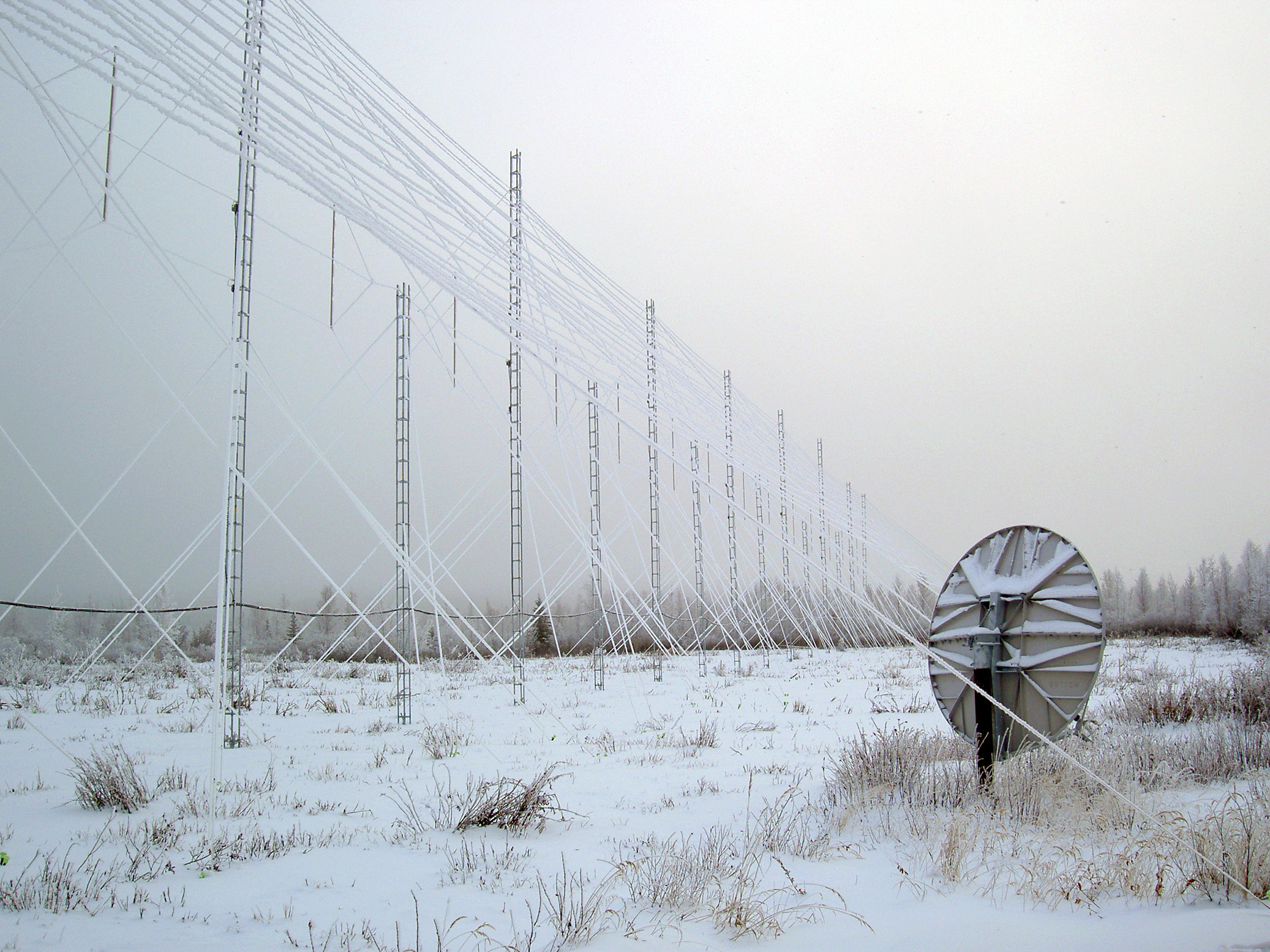
A frosty morning at SuperDARN Inuvik.
Clyde River
Clyde River radar is the youngest of SuperDARN Canada's radars, seeing first light on 6th August 2012. In 2019, the radar was updated to include SuperDARN Canada's new digital radar system, Borealis. In Inuktitut, the hamlet is called Kangiqtugaapik, which means 'nice little inlet'.
The hamlet is located on
the north-eastern shore of Baffin Island, Nunavut, facing Greenland. The area has a rich history of indigenous activity since ancient times, with the area being know for it's good hunting, fishing and whaling. [clyderiver.ca]
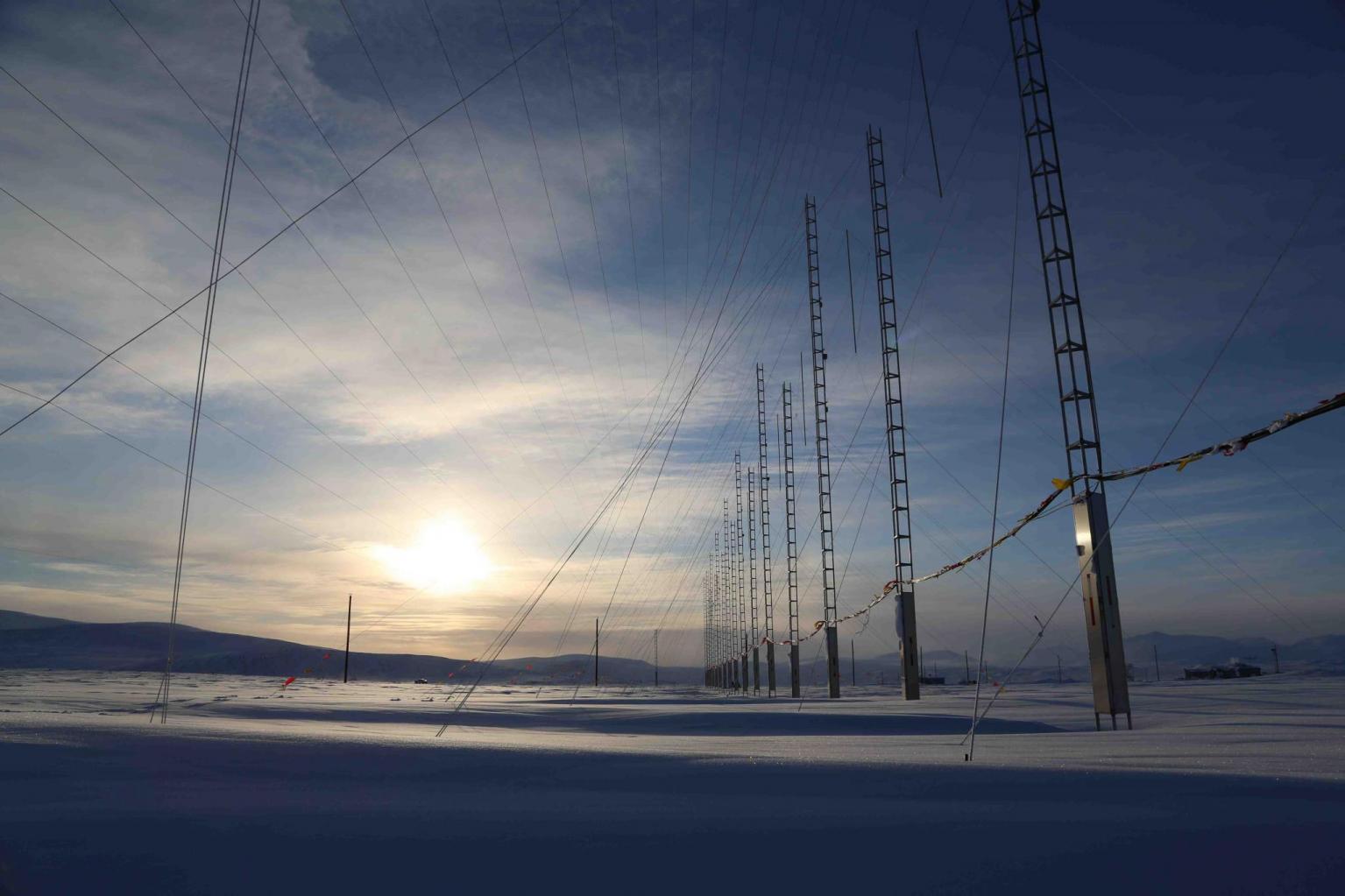
The sun setting at our Clyde River radar site.
Our Goals
The Canadian SuperDARN team is always seeking to improve the radars with innovative new radar technology. Canadian-designed engineering solutions, such as a new wire antenna system and a digital radar beam-forming electronics system, have made Canada’s upgraded SuperDARN radars state-of-the-art; Canada is one of the leaders in SuperDARN technology. More information on our new digital radar system, Borealis, can be found here.
SuperDARN Canada has 3 main strategic goals:
- Facilitate High Quality Research
SuperDARN research is in the discovery phase, with the scientific research aimed at increasing knowledge of space weather and its connections to the atmosphere and technology on the ground. SuperDARN Canada aims to foster existing scientific collaborations and develop new partnerships, within Canada and worldwide.
- Build Capacity
SuperDARN Canada strives to build scientific and technical capacity through the training of highly qualified personnel. SuperDARN Canada trainees develop skills that can be applied to work in the public and private sectors, in research, in policy making, and in training of future highly qualified personnel. This will ensure that the operation and management of SuperDARN Canada can continue into the future.
- Provide High Quality Data
High quality datasets are integral to scientific research. SuperDARN Canada, along with its international partner institutions, adheres to SuperDARN’s open data policy to increase the usage of SuperDARN data worldwide, with a focus on providing new and improved software tools. SuperDARN Canada supports the RST and pyDARN projects, which provide users with the ability to analyze, interpret and understand data. SuperDARN Canada works to ensure timely and reliable access to SuperDARN data via our data mirror, data downloading tool, and our real-time data displays.
To acheive these goals, we focus on 5 values important to us:
- Scientific Integrity - produce high quality, reliable, and accurate data.
- Excellence - in all scientific and engineering operations.
- Accountability - to build a reputation of trust.
- Responsiveness - to our users growing and diverse needs.
- Collaboration - with and among diverse national and global scentists and engineers.
Our Supporters
The University of Saskatchewan provides essential support to SuperDARN Canada, including Financial Services, Corporate Administration, Safety Resources, and more. These supports allow SuperDARN Canada to operate efficiently with a relatively low level of staffing for administration, finance and information technology.
The SuperDARN Canada group is based in the Institute of Space and Atmospheric Studies, in the Department of Physics and Engineering Physics of the University of Saskatchewan.
SuperDARN Canada have pledged to make Mission: Zero a priority in their workplace, read more at www.worksafesask.ca/mission-zero/